
- 科目一考试
- 顺序练习
- 随机练习
- 强化练习
- 模拟考试
- 科目四考试
- 顺序练习
- 随机练习
- 强化练习
- 模拟考试
- 外国语言版题库
- 英语题库
- 德语题库
- 韩语题库
- 日语题库
- 俄语题库
- 法语题库
- 西班牙语题库
- 阿拉伯语题库
- 摩托车英文题
景德镇摩托车科目四英文题库
-
1、What is the meaning of this sign?
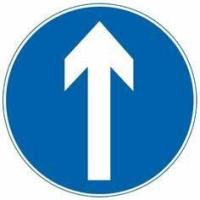
A、Straight-going lane
B、Going straight only
C、One-way road
D、No going straight
Answer:B
2、When a fast-running vehicle makes a sharp turn, it can very easily cause side collision or an overturn due to the centrifugal force.
Answer:Y
3、When a tire blowout on the road, the driver should swiftly depress the brake pedal to reduce speed, do all his can to control the steering wheel and stop the vehicle as soon as possible.
Answer:N
4、Which of the following is a safe way for motor vehicles to pass the intersection marked with this sign?
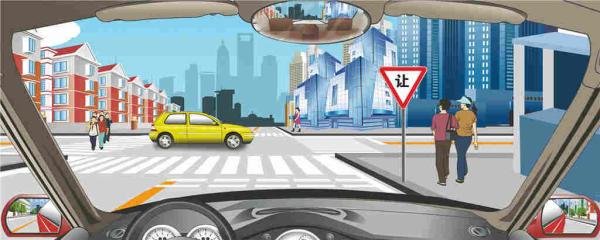
A、Stop and observe the traffic situation around the intersection
B、Approach the intersection by speeding up
C、Observe the traffic situation on the left rear side
D、Approach the intersection at a reduced speed
Answer:D
5、What are the driving behaviors that cause accidents when a motor vehicle turns to a turning road?
A、Vehicles occupy opposite lanes
B、Turn the steering wheel sharply in the bend
C、Do not slow down before turning
D、Motor vehicles drive on the right side of the road
Answer:ABC
6、What is the meaning of this sign?
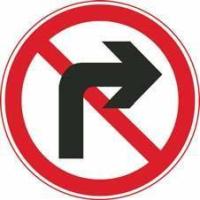
A、No entering the intersection
B、No right turn
C、No changing lane
D、No U turn
Answer:B
7、Drivers who ride motorcycles are able to not wear safety helmets.
Answer:N
8、Which lamp should be used when motor vehicles pass hrough an intersection at night where there is no traffic light signal?
A、High-beam
B、Low-beam
C、Hazard lamps
D、High-beam and low-beam should be used alternatively
Answer:D
9、When overtaking a motor vehicles on uphill sections of a mountain road, the driver should _____.
A、Honk in advance
B、Forward cars are allowed to overtake before overtaking.
C、Turn on the left-turn signal in advance
D、Speed up direct and overtake
Answer:ABC
10、When driving on a road covered with ice and snow, drivers tend to encounter glare caused by reflection of light rays from the road surface.
Answer:Y
11、Drivers should wear shoes or boots, which have heels and not skid soles, to ensure the acute, accurate, and reliable gear-shifting by feet.
Answer:Y
12、When a bicycle borrows the motor vehicle lane, the motor vehicle may sound the horn hurriedly to warn the bicycle to yield.
Answer:N
13、When a motor vehicle encounters a group of youngsters bypassing the motor vehicles parking beside the road, the driver should slow down voluntarily and yield.
Answer:Y
14、When a tire bursts suddenly on the road, the driver should refrain from violently depressing the brake pedal in panic. Instead, he/she should try his/her best to change to a low gear and use engine braking to reduce the speed of the vehicle.
Answer:Y
15、What is the meaning of this sign?
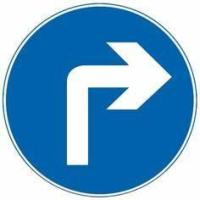
A、Turn right
B、One-way road
C、Going straight only
D、Straight-going lane
Answer:A
16、When a gas tanker is leaking heavily, which of the following measures is wrong?
A、Cut off the power
B、Wear gas mask and protect gloves
C、Turn off the valve to stop leaking
D、Evacuate people to the leeward side
Answer:D
17、What is the meaning of this sign?
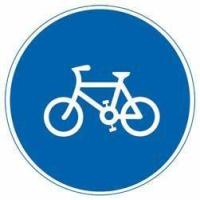
A、Electric bicycles may go
B、Parking space for non-motorized vehicles
C、Parking area for non-motorized vehicles
D、Non-motorized vehicles may go
Answer:D
18、When a fast-moving vehicle encounters an emergency the driver should turn to evade first and then brake to slow down so as to mitigate the damage.
Answer:N
19、Why is it dangerous to overtake on a snowy mud road in heavy snow?
A、Snow can increase tire adhesion
B、The flying mud made the sight bad.
C、Long braking distance in case of emergency
D、Pavement under snow and mud is easier to skid.
Answer:BCD
20、When passing a sharp curve, motor vehicle drivers may overtake if there are few other vehicles on the road.
Answer:N
21、When passing an intersection, vehicle motor drivers are not allowed to overtake.
Answer:Y
22、When a motor vehicle passes over an overflowing bridge, what should the driver do after stopping and observing closely?
A、Change to a high gear and pass rapidly
B、Constantly observe the changes of the flow
C、Prepare to stop at any time
D、Change to a low gear and pass through at a constant speed
Answer:D
23、Under such circumstance at an intersection. motor vehicle drivers should be prepared to stop and yieldat any time.
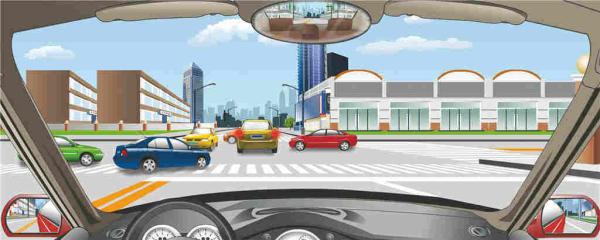
Answer:Y
24、What should be checked before driving?
A、No parts need to be checked
B、Whether the tires have been cleaned
C、Where the spare tire is placed
D、The fastening and air pressure of tires
Answer:D
25、When encountering such pedestrians, motor vehicle drivers may continuously sound the horn to alert them to yield.
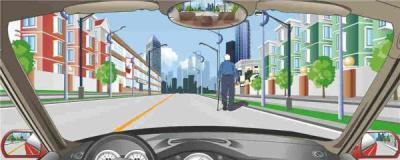
Answer:N
26、What influence does smoking have upon driving?
A、Harmful for safe driving
B、Increase concentration
C、Help relaxation
D、No effect on driving
Answer:A
27、When using splints, sticks or tree branches to keep the unexposed bones in position, it is necessary that these things should exceed the upper and lower joints of the wound.
Answer:Y
28、When driving a motor vehicle, the driver encounter pedestrians who are focused on using mobile phones, what should the driver do?
A、Drive with care
B、Observe the movement of pedestrians
C、Be ready to stop
D、Swiftly bypass from one side
Answer:ABC
29、How to do in this situation?
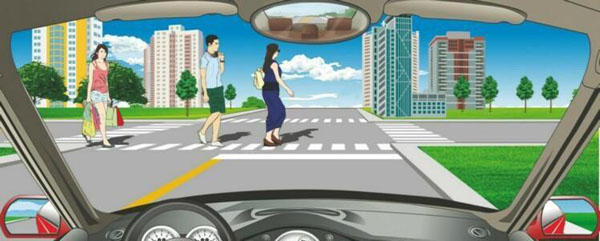
A、Stop and yield to the pedestrians
B、Bypass from the front of the pedestrians
C、Honk to remind the pedestrians
D、Bypass from the rear of the pedestrians
Answer:A
30、Under such circumstances, what should motor vehicle drivers do?
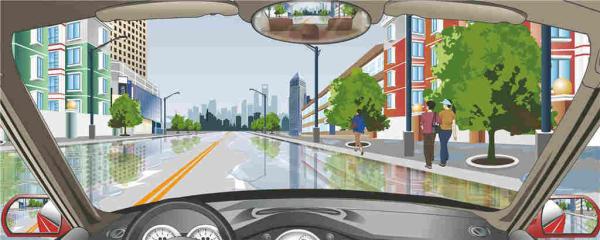
A、Pass slowly at a lower speed
B、Speed up and pass
C、Continuously sound the horn and pass
D、Pass at a normal speed
Answer:A
31、How will the adhesive force of road change when speed increases on a damp and slippery road?
A、Increase sharply
B、Increase gradually
C、Decrease sharply
D、No change
Answer:C
32、When a wounded person suffering bone fracture in the thigh, shank and spine, it is necessary to keep the fracture in position and refrain to move the wounded person.
Answer:Y
33、When a motor vehicle moves through water, drivers should intermittently and gently depress the brake pedal in order to restore braking efficiency.
Answer:Y
34、Having driven his vehicle at 110km/hour on an urban road, Mr. Lin is trying to leave the scene after a rear-end collision but is held back by bystanders. The alcohol concentration in his blood, tested in an alcohol test by the traffic police, is 135.8mg per hundred milliliters. Which of the following law-breaking acts did Mr. Lin commit?
A、Drunk driving
B、Speeding
C、Fatigued driving
D、Hit-and-run driving
Answer:ABD
35、What is the meaning of this sign?
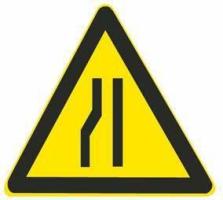
A、Road narrows on both sides
B、Road narrows on the right side
C、Road narrows on the left side
D、Bridge narrows
Answer:C
36、After setting off from the roadside, motor vehicle drivers should speed up as soon as possible and make a sharp left-turn in order to drive into the normal lane.
Answer:N
37、When a vehicle stops temporarily at the roadside at night, the wrong measure is to ______.
A、Turn on the warning flash light
B、Turn on the contour light
C、Turn on the high beam light
D、Turn off all lights
Answer:CD
38、Driving a motor vehicle in the downhill section of a mountain road avoids overtaking as much as possible because _______.
A、Vehicle resistance in downhill section is very high
B、Vehicles on downhill sections are more difficult to control than on flat roads due to gravity.
C、In downhill section, the front speed is faster and it is difficult to overtake.
D、Vehicles on downhill sections tend to be too fast due to gravity
Answer:BD
39、Before driving, it is necessary to check whether the cooling liquid, engine oil and fuel oil, are leaking.
Answer:Y
40、How should lamps be used when motor vehicle drivers pass through a two-way tunnel?
A、Turn on the hazard lamps
B、Turn on the high-beam
C、Turn on the fog lamp
D、Turn on the low-beam
Answer:D
41、Motor vehicle drivers may borrow a special lane for other vehicle types, if one exists, to overtake.
Answer:N
42、When rescuing the injured, it is necessary to ________.
A、Save life first and treat the wounds later
B、Treat the wounds first and safe life later
C、Help the slightly wounded persons first
D、Help the seriously wounded persons later
Answer:A
43、When approaching a vehicle on a narrow slope, which one of the following ways is correct?
A、The descending vehicle yields to the ascending
B、The vehicle which is further from the slope crest should yield
C、The ascending vehicle yields to the descending
D、If the descending vehicle has reached the midpoint while the ascending vehicle has not yet set out, the descending vehicle must yield.
Answer:A
44、When driving in a heavy rain, drivers should contro their speed to prevent their vehicles from sliding.
Answer:Y
45、Which of the following method is correct to rescue an unconscious person?
A、Apply cardio-pulmonaryresuscitation immediately
B、Press the philtrum of the wounded person with force
C、Continuously slap the face of the wounded person
D、Check the breath of the wounded person before other emergency treatments
Answer:D
46、What is the purpose of checking before driving?
A、Confirm whether the tyres of motor vehicles are damaged or not
B、Confirm whether there is a safety hazard near the vehicle.
C、Confirm whether there are obstacles around the vehicle
D、Confirm whether the road in front of the vehicle is safe
Answer:ABCD
47、When driving on a snowy day, drivers should follow the tracks on the road before them.
Answer:Y
48、How should lamps be used by the motor vehicle driver who follows a vehicle on a road section at night where he street light condition is good?
A、Turn off the headlamp
B、Use high-beam
C、Turn off all lamps
D、Use low-beam
Answer:D
49、When the driver discovers that steering is stiff, the wrong measure is to ___________.
A、Reduce speed and stop the vehicle as fast as possible
B、Stop at a safe place
C、Continue to drive
D、Identify the cause
Answer:C
50、What should the driver pay attention to when the motor vehicle passes a school?
A、Observe the traffic signs and markings
B、Slow down and pass slowly
C、Prohibited from sounding the horn
D、Pass rapidly
Answer:ABC
- 景德镇摩托车科目四英文题库 相关内容
- 中卫摩托车驾照考试科目四英语题 眉山用英文考摩托车驾驶证 鞍山摩托车驾照考试科目四英语题 辽宁摩托车考试英语题库 保定用英语考摩托车驾照科目四 朔州摩托车驾照考试科目四英语题 莆田摩托车考试英语理论试题 江门摩托车驾照考试科目四英语题 内江用英语考摩托车驾照科目四 鹤壁摩托车科目四英文题库 黄石摩托车英语考试题 海南用英文考摩托车驾驶证 兰州外国人考摩托车驾照 自贡外国人考摩托车驾照 昌都摩托车驾照考试科目四英语题 龙岩摩托车驾照理论试题英语版
Copyright © 2025 驾考 版权所有