
- 科目一考试
- 顺序练习
- 随机练习
- 强化练习
- 模拟考试
- 科目四考试
- 顺序练习
- 随机练习
- 强化练习
- 模拟考试
- 外国语言版题库
- 英语题库
- 德语题库
- 韩语题库
- 日语题库
- 俄语题库
- 法语题库
- 西班牙语题库
- 阿拉伯语题库
- 摩托车英文题
安徽科目四英文版模拟
-
1、Under such circumstances, what should be done bY motor vehicle drivers in order to yield to the pedestrians politely?
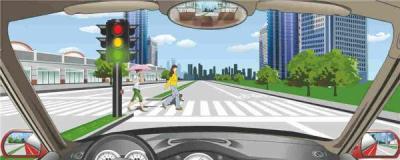
A、Set off after pedestrians pass
B、Set off and bypass in front of the pedestrians
C、Sound the horn to warn the pedestrians to yield
D、Set off and approach the pedestrians slowly
Answer:A
2、Before a motor vehicle enters a tunnel, the driver should adjust the speed in accordance with the indication of the traffic sign at the entrance of the tunnel.
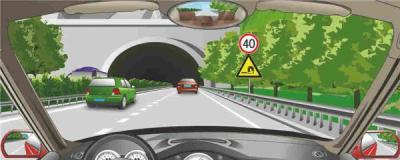
Answer:Y
3、When the engine suddenly stalls on the road and cannot be restarted, the driver should pull over in a timely fashion and identify the cause of the stalling.
Answer:Y
4、When steering failure happens to a fast moving motor vehicle, what should the driver do?
A、Apply emergency braking
B、mmediately change to a low gear
C、Reasonably use the driving brake and the stopping brake and refrain from applying emergency braking
D、Turn on the hazard lamps
Answer:BCD
5、The drivers, loaders and supercargoes responsible for dangerous chemicals transportation should all full understand the chemical characteristics, potential risks, features of the packaging containers and emergency measures for any unexpected accidents.
Answer:Y
6、Under such circumstances, the motor vehicle driver should voluntarily reduce speed and let the vehicle behind overtake.
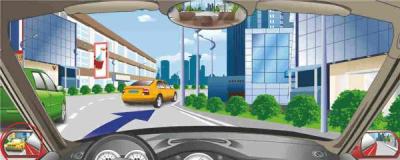
Answer:Y
7、When a motor vehicle encounters thick fog on an expressway and the visibility is poor, the driver should immediately brake and stop.
Answer:N
8、When a motor vehicle slides sideways, how should the driver adiust the direction?
A、If the front wheels skid sideways, turn the steering wheel in the direction of the skid
B、If the front wheels skid sideways, turn the steering wheel in the opposite direction of the skid
C、If the rear wheels skid sideways, turn the steering wheel in the direction of the skid
D、If the rear wheels skid sideways, turn the steering wheel in the opposite direction of the skid
Answer:BC
9、Under such circumstances, what should be done by the motor vehicle driver?
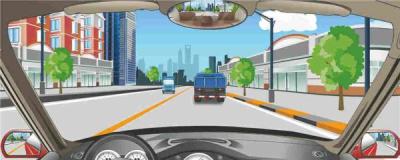
A、Overtaking the vehicle in front on its left
B、Overtaking by occupying the opposite lane
C、Overtaking the vehicle in front on its right
D、Following the vehicle in front
Answer:D
10、When a motor vehicle on an expressway stops in an emergency due to breakdown or an accident, what should the driver and the passengers do?
A、Stand in front of the motor vehicle
B、Wait in the motor vehicle for rescue
C、Stand behind the motor vehicle
D、Promptly move to the road shoulder on the right side or the emergency lane
Answer:D
11、had a head-on collision at the speed of 40 kilometers per hour with Mr. Wangs three-wheeled freight motorcycle carrying 19 passengers, killing10 people nd injuring 9. What are the main illegal acts committed by the two drivers?
A、Mr Ye drove an unpermitted vehicle type
B、Mr. Wang drove a freight motorcycle to carry passengers
C、Mr Ye exceeded the speed limit
D、Mr. Wang failed to follow the guidance of the traffic signal lights
Answer:BC
12、When encountering this situation, which of the following is the correct way to overtake other vehicles?
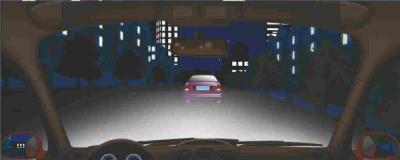
A、Turn on high-beam
B、Use high-beam and low-beam alternatively
C、Turn on low-beam
D、Turning on hazard lamp
Answer:D
13、What should drivers keep in mind when driving on amountainous road?
A、Keep a safe distance
B、Avoid occupancy of another lane when making a turn
C、Downshift in advance when ascending an abrupt slope
D、Taking full advantage of engine braking when descending a long slope
Answer:ABCD
14、The guide line of a changeable lane indicates that drivers can choose their direction at will.
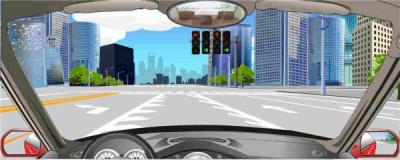
Answer:N
15、The sign on the right warns of three or more winding roads ahead.
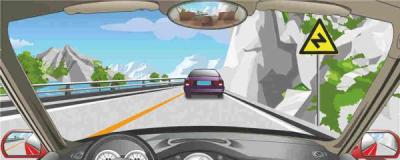
Answer:N
16、The circle in the center of the intersection indicates that drivers should drive along the inner side when making a small left turn.
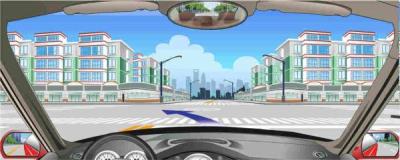
Answer:Y
17、Motor vehicles are permitted to follow the guidance of the arrow in this picture and enter the lane of an expressway.
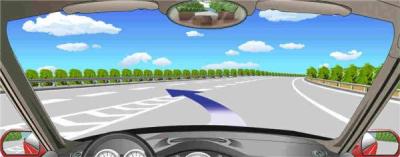
Answer:N
18、When passing a sharp curve, motor vehicle drivers may overtake if there are few other vehicles on the road.
Answer:N
19、Mr. Tang drove a large bus with 74 passengers (capacity 30 people). When descending a long curving slope at a speed of 38 kilometers per hour, the bus overturned to a brook beside the road. As a result of the accident, 17 people were killed and 57 people injured. What's the main illegal act committed by Mr. Tang?
A、Driving after drinking
B、Carrying more passengers than permitted
C、Fatigued driving
D、Speeding
Answer:BD
20、The driver may not change lanes when the motor vehicle turns right at this intersection.
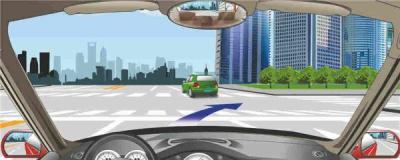
Answer:N
21、How many kinds of law-breaking acts are displayed in flash 2?
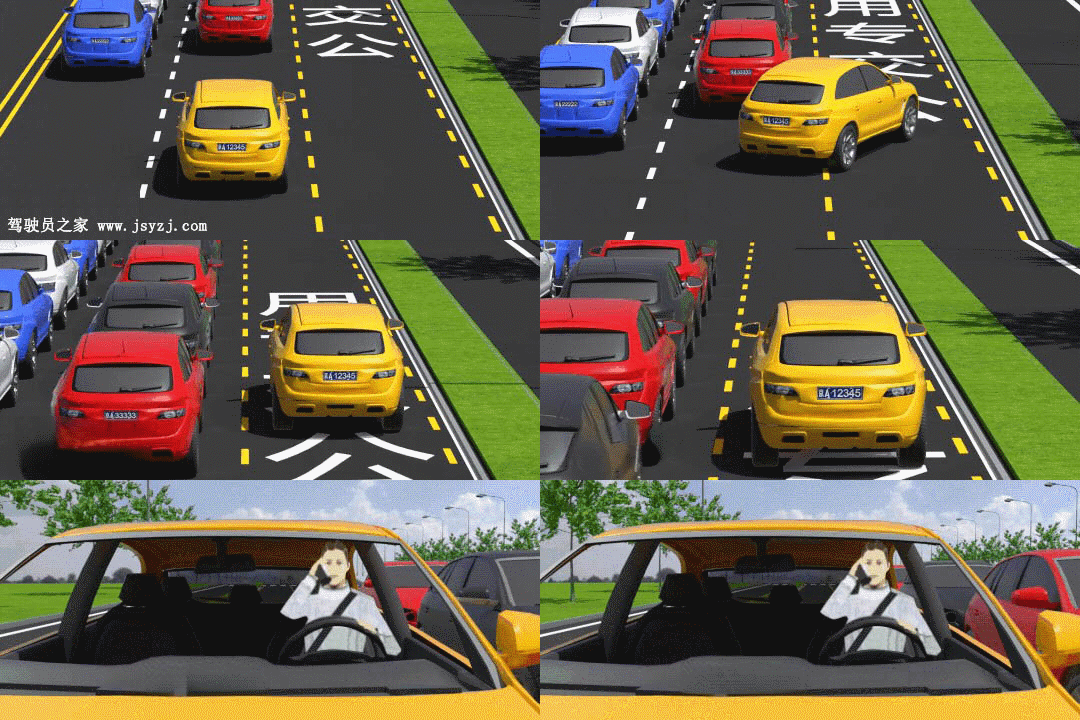
A、One
B、Two
C、Three
D、Four
Answer:B
22、Under such circumstances, motor vehicle drivers lould follow the vehicle in front and drive into the Intersection to wait.
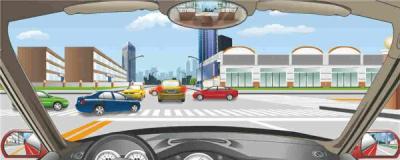
Answer:N
23、When the rear wheels of a motor vehicle skid sideways on a muddy road, the driver should turn the steering wheel in the opposite direction of the side skid.
Answer:N
24、What should the driver do when the motor vehicle passes a flyover?
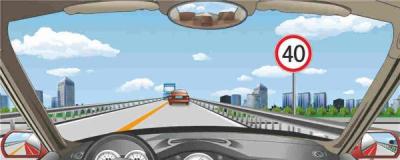
A、Speed up and pass rapidly
B、Keep the speed under 15 km/hour
C、Drive at the speed indicated by the traffic sign
D、Drive close to the central line of the flyover
Answer:C
25、When braking, side skid or tail swing may occur if the rear wheels are blocked.
Answer:Y
26、How many kinds of law-breaking acts are displayed in flash 4?
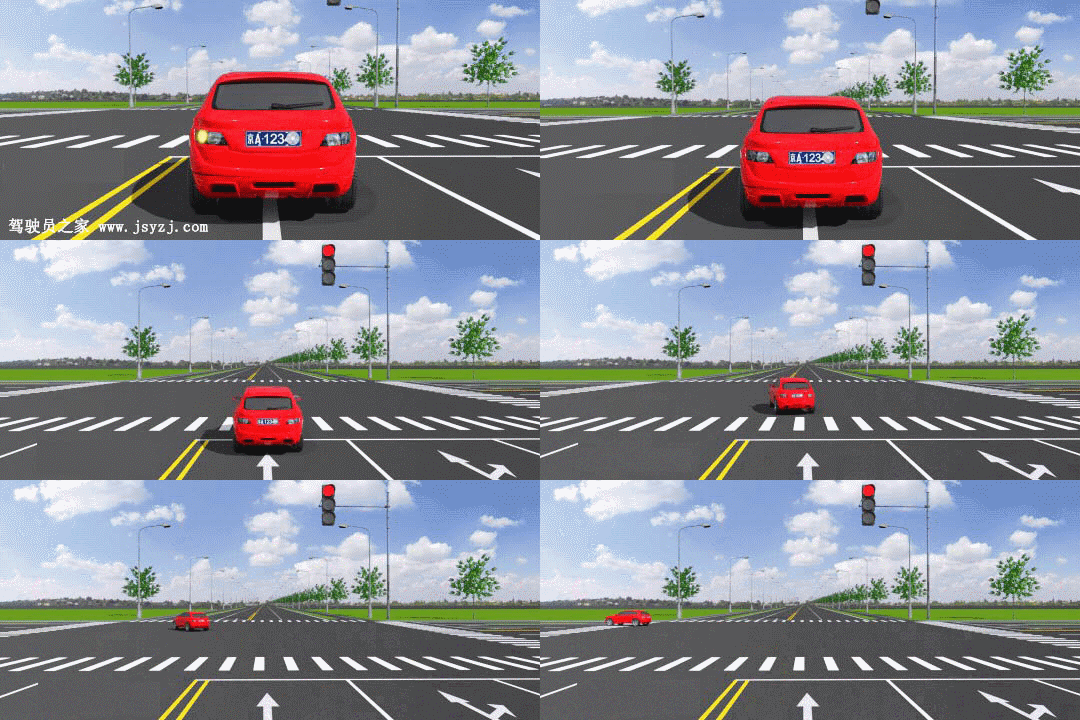
A、One
B、Two
C、Three
D、Four
Answer:C
27、When encountering this situation in a residential area the driver should sound the horn continuously.
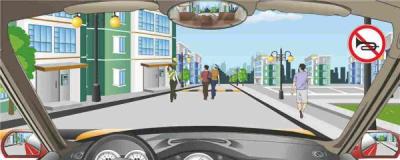
Answer:N
28、After speeding up to more than 60 km/hour, a motor vehicle driver may drive onto the driving lane directly.
Answer:N
29、As shown in this picture, the intersection guide line is designed to help drivers make turns.
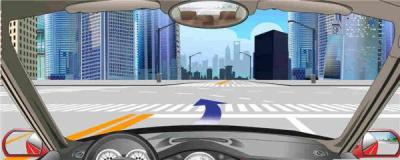
Answer:Y
30、Motor vehicle drivers are allowed to overtake on this road section.
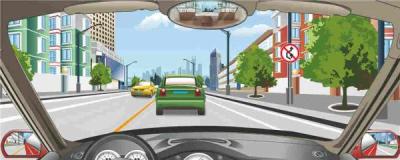
Answer:N
31、The sign in the red circle indicates that the left road is only for small vehicles.
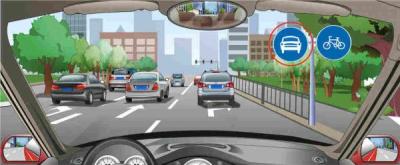
Answer:N
32、Mr Hao drove a heavy dump truck with 84.84 tons of cargo (truck allowing for 15.58 tons). When he drove on the No 262 provincial highway in Luanxian County, at the spot of 34 kilometers mark by 623 meters, his truck overturned onto the sideway after a rear-end collision with another truck in front carrying 45.85 tons of cargo(a truck allowing for 1. 71 tons). As a result of this accident, 19 people were killed and 17 injured. What's the common illegal act of the two drivers?
A、Speeding
B、Overloaded
C、Fatigued driving
D、Driving after drinking
Answer:B
33、Under such circumstances, what should the motor venicle driver do?
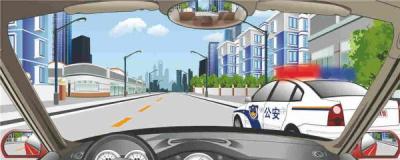
A、Reduce speed and yield by the left side
B、Reduce speed and yield by the right side
C、Speed up and yield by the left side
D、Go ahead along the original route
Answer:A
34、When there is a sudden braking failure on the road, what should be done by the driver?
A、Firmly holding the steering wheel and controlling the direction
B、Immediately changing to a low gear to reduce speed
C、Using the stopping brake to reduce speed
D、Turning on the hazard lamps
Answer:ABCD
35、Motor vehicle drivers may make a U-turn in this area as long as it will not affect the passing of pedestrians.
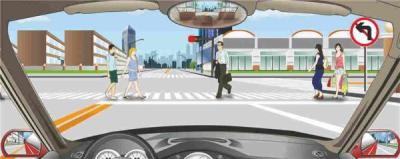
Answer:N
36、The sign on the right warns of a village 200 meters ahead.
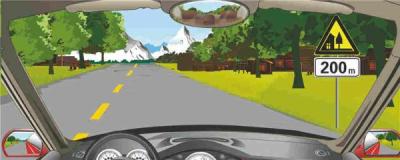
Answer:Y
37、What should drivers do when encountering a rainstorm on a common road and the windscreen-wiper fails to make sight clear?
A、Drive at a reduced speed
B、Drive carefully
C、Cut speed in time and pull over
D、Drive at a normal speed
Answer:C
38、The sign on the right warns of traffic signals ahead.
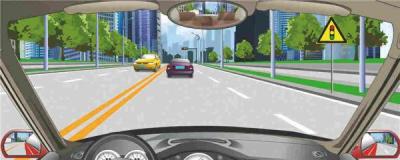
Answer:Y
39、Motor vehicles drivers may overtake by borrowing the opposite lane on this kind of road.
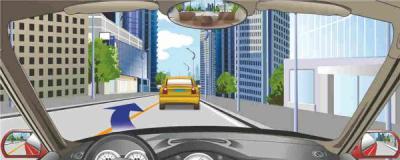
Answer:N
40、At this moment, the driver may speed up and pass the intersection rapidly.
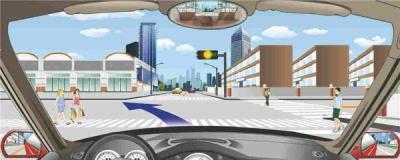
Answer:N
41、The sign on the right indicates a bypass route at the intersection ahead.
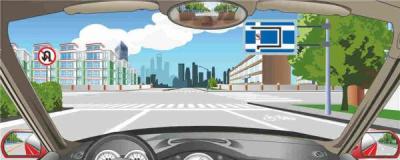
Answer:Y
42、What should motor vehicle drivers do under such circumstances at night?
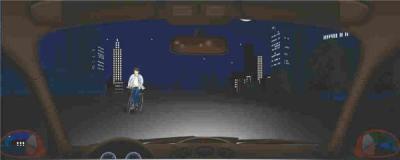
A、Turn off the headlamp when approaching
B、Use low-beam
C、Use high-beam
D、Turn off all lamps in advance
Answer:B
43、The sign on the right side warns of crosswind on the mountain pass ahead.
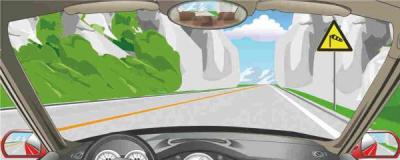
Answer:Y
44、Before setting off, it is necessary to check the driving cabin, engine cabin, external and tires of the motor vehicle.
Answer:Y
45、The sign on the right indicates a 200-meter distance from the gas station ahead.
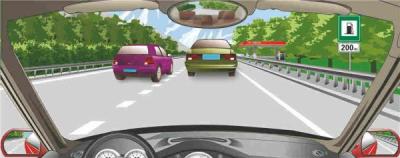
Answer:Y
46、The motor vehicle equipped with ABS may sideslip during an emergency brake.
Answer:Y
47、When a gas tanker is leaking heavily, which of the following measures is wrong?
A、Cut off the power
B、Wear gas mask and protect gloves
C、Turn off the valve to stop leaking
D、Evacuate people to the leeward side
Answer:D
48、When passing an intersection, vehicle motor drivers are not allowed to overtake.
Answer:Y
49、The sign on the right warns of an abrupt slope section ahead.
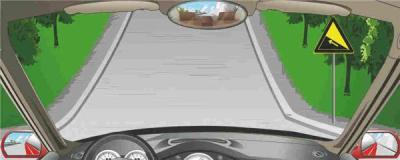
Answer:Y
50、When encountering such a situation, the vehicles should cut speed or stop to yield as approaching each other.
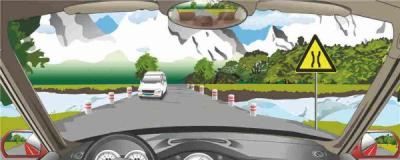
Answer:Y
- 安徽科目四英文版模拟 相关内容
- 新疆英文驾考科目四题库PDF电子版 河南驾考科目四英语 海南科目四英文版在哪里找 西藏科目四英文版题目 贵州驾考科目四英语版书 广东只认识英文可以考科目四吗 甘肃科目四英文版模拟 甘肃科目四英文版练习题库 天津驾照考试科目一英文版 湖南科目四英文版练习题库 天津驾考科目四英语 老外考驾照科三视频教程下载 甘肃驾考科目四英语 青海只认识英文可以考科目一吗 浙江科目四英文版练习题库 重庆驾考英文版题库
Copyright © 2025 驾考 版权所有